Were the porn theaters romantic? Not at all. But because of the people who used them, they were humane and functional, fulfilling needs that most of our society does not yet know how to acknowledge. (pg 90)What other places and activities serve largely unacknowledged needs?
Saturday, June 1, 2013
On "Times Square Blue" by Samuel Delaney
Saturday, May 25, 2013
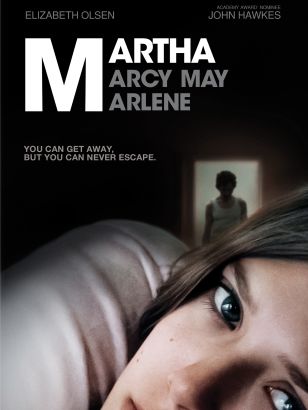
Comparing Cults and Contemporary Culture in "Marthy Marcy May Marlene"
On Marthy Marcy May Marlene (2011), the late Rogert Ebert writes, "I think its a flaw that the film tries to draw parallels between the farm and the lake home."
I disagree. The film's message is significant to our lives because it draws parallels between the farm and the lake home.
Whenever a flashback scene came on, I actively watched the lifestyle of the cult members. I think that like me, many viewers will try to notice all of the attributes that distinguish the characters who live at the farm from members of mainstream society.
Then, when I watched a scene set at the sister's house where the rules of normal culture apply, my attention was highly sensitive to picking out the rules underlying every social interaction. Whenever Martha crossed a line, and her sister or her husband responded negatively, I was made aware of how their sense of propriety is not universal, but rather, one particular set of cultural rules that could be easily replaced with another. My awareness would not have been aimed at picking apart the sister's and husband's code of behavior if the film did not cut back and forth between the farm and the lake house, thereby inviting comparison between the two.
Recall the scene when Martha lies down on the bed where her sister is having intercourse with her husband. The sister tells Martha not to walk into rooms where other people are having sex, but the only reason she can give to support her position is "because it's not normal."
(To be fair, the sister might not be the best person for the task of justifying the need for sexual privacy—there are more valid reasons why people should not barge in on other swho are sleeping together. But there are also valid reasons why people shouldn't care.)
I like that the film draws parallels between cult life and normal life. When we, the audience, compare the two, we are challenged to reconsider the reasons why we do things the way that we do, and to be more open minded about behavior that we reflexively dismiss as wrong and weird.
I disagree. The film's message is significant to our lives because it draws parallels between the farm and the lake home.
Whenever a flashback scene came on, I actively watched the lifestyle of the cult members. I think that like me, many viewers will try to notice all of the attributes that distinguish the characters who live at the farm from members of mainstream society.
Then, when I watched a scene set at the sister's house where the rules of normal culture apply, my attention was highly sensitive to picking out the rules underlying every social interaction. Whenever Martha crossed a line, and her sister or her husband responded negatively, I was made aware of how their sense of propriety is not universal, but rather, one particular set of cultural rules that could be easily replaced with another. My awareness would not have been aimed at picking apart the sister's and husband's code of behavior if the film did not cut back and forth between the farm and the lake house, thereby inviting comparison between the two.
Recall the scene when Martha lies down on the bed where her sister is having intercourse with her husband. The sister tells Martha not to walk into rooms where other people are having sex, but the only reason she can give to support her position is "because it's not normal."
(To be fair, the sister might not be the best person for the task of justifying the need for sexual privacy—there are more valid reasons why people should not barge in on other swho are sleeping together. But there are also valid reasons why people shouldn't care.)
I like that the film draws parallels between cult life and normal life. When we, the audience, compare the two, we are challenged to reconsider the reasons why we do things the way that we do, and to be more open minded about behavior that we reflexively dismiss as wrong and weird.
Thursday, April 18, 2013
Questionable conclusions from "Your Brain on Video Games"
Daphne Bavelier: Your brain on videogame
In this TEDTAlk, cognitive researcher Daphne Bavelier debunks some popular misconceptions about the negative effects of playing video games, and asserts that playing fast-paced action games (such as first-person shooters) can actually benefit our brains, and improve our eyesight.
However, we should not come away from this TEDTalk with the conclusion that playing action games improves concentration or multitasking. Although the structure and the rhetoric of her presentation often implies that video game playing causes people to have a high ability to focus and multitask, all we can really conclude from the studies she cites is that video game playing correlates with doing well on a few game-like psychological tests that are ostensibly indexes of concentration and multitasking capabilities.
What Bavelier says about eyesight is straightforward enough. Test subjects with poor vision are asked to play a moderate amount of action games for a few weeks. When they leave the study, they have better eyesight than before they went in (and presumably, better eyesight than members of a control group who did not play games during the same interim). There's a clear causal relationship.
Unfortunately, that's where the good and simple science comes to an end. Bavelier's assertions about the relationship between action games, attention span, and the ability to multitask are murky and imprecise.
Bavelier uses two game-like tests to measure the attention span of gamer and non-gamer test subjects. In the first test, the subject is presented with a series of words, and each word is written in a different color font. The subject attempts to name the color that a word is written in, even when the word is the name of a different color—for example, the word "green" might be written in blue, and the subject successfully completes the test if they are able to say "blue"—the color that the word is written in, as opposed to "green," the meaning that the word spells. As it turns out, action gamers are better at correctly naming the color of the word than non-action gamers. Therefore, Bavelier says, "playing those action games doesn't lead to attention problems."
Color me unconvinced. Nobody should be surprised that action-gamers are able to perform well on this test. Quickly solving a confusing-yet-simple color puzzle isn't very different from quickly moving a crosshair onto an enemy in Black Ops II.
But is that really what we mean when we say that somebody has a high attention span? I associate "paying attention" with being able to focus on listening to a lecture, writing a piece of code, watching a long film or observing nature, etc. These attention-challenges are often much more complex and less interactive than the "quick, name the color" test and popular action games. Listening, composing, and observing all require active reflection, patience, and critical thinking, rather than short-term memory and impulsive reflexes.
Bavelier invokes another test where action gamers are able to keep track of more objects on a screen than non-action gamers. The implication is that gamers score well on the test because they are gamers. But couldn't it be that the people who are naturally able to keep track of multiple visual variables at once are also the same sort of people who are more likely to be good at video games, and are therefore more likely to play them?
This question applies to what Bavelier says about action gamer brains being more "efficient" in those regions that are associated with the ability to pay attention. (She does not, unfortunately, go into what she means by "efficient" in the context of neural networks.) In the brains of action gamers, the parietal cortex (which aims attention), the frontal lobe (the attention sustainer), and the anterior cingulate (the attention locater, regulator, and conflict resolver) are all "more efficient" than in the brains of non-action gamers. Once again, Bavelier does not address the potential confusion between correlation and causation. She implies that these networks of the brain are more efficient in gamers because they are in the habit of navigating a virtual world. It seems to me that somebody with a more efficient parietal cortex might be more likely to play video games because they're naturally good at them.
In her defense, Bavelier never blatantly asserts that playing video games will increase your attention span. However, her ambiguity is problematic. Are video games "good" for the brain, or not? What does a healthy brain look like to her? Who is funding her research?
Questions and criticisms aside, I hope that Bavelier is right in her optimistic take on video games. A lot of us spend a lot of time playing games, and I want to believe that we're getting something more than mindless fun out of it. However, we need to be careful not to confuse cause and effect. If we believe that we have good attention spans because we play games, then gaming becomes a strengthening activity like exercise, when the opposite might be the case. When we play games while believing that we're doing something good for ourselves, we might actually just be spinning our cognitive wheels in virtual mud, and not cultivating any skills that are useful outside of the context of the gaming world.
Gamers might be able to score well on Bavelier's tests, but I'm more interested in comparing the meaningful aspects of the lives of gamers and non-gamers. Are gamers more or less likely to be happy than non-gamers? Are they more or less likely to have a comfortable income? To have good relationships with the people in their life? A gamer could have the most efficient parietal cortex in the world, but all of their brain power might be doing very little to benefit themselves if all of their mental effort is focused on getting headshots in Call of Duty.
Wednesday, March 20, 2013
"Party Down" - Dreams are a life force
Is it good to hang on to lofty dreams, even when it seems like they'll never come true? Or are dreams just distracting escapes from the life that we have now?
The characters in Starz Network's now-extinct series Party Down (2009-2010) don't have many good experiences when it comes to dreams. The show is about a team of wannabe entertainers (a writer, a comedian, actors) who fecklessly attempt to break into Hollywood while working as caterers.
Virtually every episode of Party Down depicts the characters feeling superior to their humble catering work, and explores different aspects of the situation of being locked out of what you want to really be doing.
The second episode of the first season speaks directly to the issue at hand: the utility of lofty dreams:
If we take Constance's thinking a step further, we arrive at the idea that dreams are always worth pursuing—but not necessarily for the sake of fulfilling them. In the pursuit of a dream, we hold on to a sense of direction, purpose, and vitality.
It's easy for us to fall into thinking of desires, goals, and dreams as items on a checklist that need to be completed as soon as possible. However, in our best moments, we're not trying to be "done," and we can just enjoy the ride.
In some Eastern religions, there's an emphasis on enjoying the act work, rather than on constantly longing for the outcome of work. The success or failure of an enterprise is irrelevant; the state of mind that we're in while we are trying to succeed is what matters.
I'm reminded of Tibetan Buddhist sand mandalas. Some Buddhist monks practice a meditation that involves painstakingly creating an intricate mandala out of sand. Then, once the mandala is finished, they ritualistically destroy their work by blowing the whole thing away. It's a practice in mindfulness—paying close attention to what's going on—as well as acceptance of impermanence. The point of the meditation is not to have something beautiful, but to be absorbed in the process of making something beautiful. Constance is saying the same thing.
The characters in Starz Network's now-extinct series Party Down (2009-2010) don't have many good experiences when it comes to dreams. The show is about a team of wannabe entertainers (a writer, a comedian, actors) who fecklessly attempt to break into Hollywood while working as caterers.
Virtually every episode of Party Down depicts the characters feeling superior to their humble catering work, and explores different aspects of the situation of being locked out of what you want to really be doing.
The second episode of the first season speaks directly to the issue at hand: the utility of lofty dreams:
It's easy for us to fall into thinking of desires, goals, and dreams as items on a checklist that need to be completed as soon as possible. However, in our best moments, we're not trying to be "done," and we can just enjoy the ride.
In some Eastern religions, there's an emphasis on enjoying the act work, rather than on constantly longing for the outcome of work. The success or failure of an enterprise is irrelevant; the state of mind that we're in while we are trying to succeed is what matters.
I'm reminded of Tibetan Buddhist sand mandalas. Some Buddhist monks practice a meditation that involves painstakingly creating an intricate mandala out of sand. Then, once the mandala is finished, they ritualistically destroy their work by blowing the whole thing away. It's a practice in mindfulness—paying close attention to what's going on—as well as acceptance of impermanence. The point of the meditation is not to have something beautiful, but to be absorbed in the process of making something beautiful. Constance is saying the same thing.
Monday, March 18, 2013
"The Exorcist" (1973) - Leap of faith or despair?
When I was a kid, the most striking thing to me about The Exorcist was the green puke.
I rewatched the film recently, and I discovered that Father Damien Karras's internal battle for faith was much more interesting than the humorously dated visuals.
For many people, including Father Karras, it's difficult to believe all of the religious stuff that Father Merrin represents: the idea of God, the idea of life after death, the belief that our lives have some sort of objective purpose, and so forth. For much of the film, Karras lives in a state of lost faith, which is precipitated by the no-win situation of his mother's living situation, and ultimately, her death.
However, Karras's confrontation with evil (the demon possessing Regan) has the opposite effect of pushing him into total faithlessness. Although Karras's reclamation of his faith is not explicitly stated in the film, I believe that it is illustrated by his act of martyrdom when he throws himself out of the window. By killing himself in order to kill the demon, he is pulling a Jesus: he sacrifices himself so that Regan (a corrupted child) can be free of the demon (sin).
Some might argue that Karras's noble suicide could have been done in a state of total faithlessness. It could be that his depression had reached the point where he wanted to be dead, and that he figured he might as well try to kill Pazuzu (the demon) while he's at it.
However, his death is still figuratively and visually a leap of faith. Trust me: if you're writing a movie, and you want to show somebody killing themselves without having faith, then don't make them do it by leaping.
I rewatched the film recently, and I discovered that Father Damien Karras's internal battle for faith was much more interesting than the humorously dated visuals.
You don't need to believe in God to appreciate Merrin's answer to Karras's question. Translated into a less religious tone, the essence of what Merrin says boils down to: "Even though we are capable of being possessed by evil and being afflicted by suffering, we are worthy of love."
Karras
Why this girl? It makes no sense.
Merrin
I think the point is to make us despair. To see ourselves as animal and ugly. To reject the possibility that God could love us.
For many people, including Father Karras, it's difficult to believe all of the religious stuff that Father Merrin represents: the idea of God, the idea of life after death, the belief that our lives have some sort of objective purpose, and so forth. For much of the film, Karras lives in a state of lost faith, which is precipitated by the no-win situation of his mother's living situation, and ultimately, her death.
However, Karras's confrontation with evil (the demon possessing Regan) has the opposite effect of pushing him into total faithlessness. Although Karras's reclamation of his faith is not explicitly stated in the film, I believe that it is illustrated by his act of martyrdom when he throws himself out of the window. By killing himself in order to kill the demon, he is pulling a Jesus: he sacrifices himself so that Regan (a corrupted child) can be free of the demon (sin).
Some might argue that Karras's noble suicide could have been done in a state of total faithlessness. It could be that his depression had reached the point where he wanted to be dead, and that he figured he might as well try to kill Pazuzu (the demon) while he's at it.
However, his death is still figuratively and visually a leap of faith. Trust me: if you're writing a movie, and you want to show somebody killing themselves without having faith, then don't make them do it by leaping.
Wednesday, March 13, 2013
Metaphysical Optimism in C.S. Lewsis's "The Magician's Nephew"
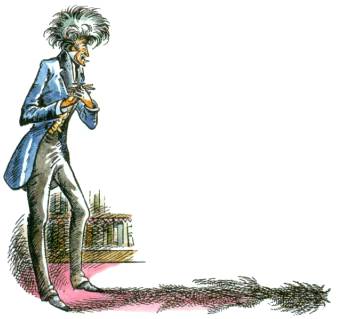
"When the great moment came and the Beasts spoke, he missed the whole point; for a rather interesting reason. When the Lion had first begun singing, long ago when it was still quite dark, he had realised that the noise was a song. And he had disliked the song very much. It made him think and feel things he did not want to think and feel. Then, when the sun rose and he saw that the singer was a lion ("only a lion," as he said to himself) he tried his hardest to make believe that it wasn't singing and never had been singing - only roaring as any lion might in a zoo in our own world. "Of course it can't really have been singing," he thought, "I must have imagined it. I've been letting my nerves get out of order. Who ever heard of a lion singing?" And the longer and more beautiful the Lion sang, the harder Uncle Andrew tried to make himself believe that he could hear nothing but roaring. Now the trouble about trying to make yourself stupider than you really are is that you very often succeed. Uncle Andrew did. He soon did hear nothing but roaring in Aslan's song. Soon he couldn't have heard anything else even if he had wanted to. And when at last the Lion spoke and said, "Narnia awake," he didn't hear any words: he heard only a snarl."Uncle Andrew has this crazy experience of seeing a god—Aslan, the lion—create a new world, but because the event violates his preconceived ideas of reality ("Who ever heard of a lion singing?") he doesn't appreciate it at all, and hears only snarls when the animals speak.
This passage is a reminder that many of us live our lives by attributing wonderful-but-impossible events to the imagination, to our "nerves getting out of order." It's difficult to believe that things really might be as magical as they sometimes seem, so we reduce our experiences to by giving them a mundane explanation: "Life isn't really all that great, it's just chemicals in our brains making us feel that way," or "That's not true, they're just deluding themselves."
Being very logical and evidence-based is a good thing to know how to do, but when we control every aspect of our lives with rigorous rational materialism, we run the risk of eliminating the possibility of wonder. We risk living inside of rules that we invent to describe our experience of life, rather than life itself.
Tuesday, February 26, 2013
Bertrand Russell's "A History of Western Philosophy" - The Idealists and Prejudicing Permanence
For Plato and others like him, there is the illusory sensible world of appearance, and there is the eternal world from which the sensible word emanates. Nothing in the sensible world can be "perfect" in the sense that there is nothing permanent or absolutely rational in the sensible world. We cannot perceive a perfectly straight line through our bodily senses. However, we can conceive of—or inwardly perceive—a perfectly straight line in our minds.
But why should the rationally perfect concepts of the ideal world have any more reality than the alleged imperfection manifestations of those concepts? Plato's idealism strikes me as a sort of universal solipsism: the world emanates from the ideas in our mind.
I don't think that there's a way to persuasively prove Plato is absolutely incorrect on this point. However, his correctness is irrelevant. What is relevant is the attitude that Platonic Idealism leads to. The external world (sensible world) is constructed as a bunch of irrelevant appearances. The internal world (ideal world) is the only place where permanence, rationality, and happiness can be found.
But why should the rational or the permanent be valued any more highly than the irrational and the fickle? Perhaps many people are attracted to that which is permanent and consistent, because it is easier to feel safe and happy in a world with few surprises. This is not true of all people, of course, and it is not true of all people over the course of their entire life. But it seems to me that the valuation of that which is permanent over that which is transient is entirely arbitrary, and a matter of individual temperament.
The ideas of "truth" and "permanence" are often clustered together. For example, when we say that "It's absolutely true that 2+2 = 4," most of us probably believe that the truth of the statement is permanent—we believe that 2+2 will not equal 5 tomorrow, or that 2+2 did not equal 3 yesterday.
However, it's perfectly possible to conceive of this truth as being impermanent. Imagine that we all were to wake up tomorrow, and find that 2+2 = 5. When we count on our fingers, in our minds, and using calculators, it all adds up to 5. All of our computation and every piece of technology that relies upon their successful calculation will not execute properly unless the sum of 2 and 2 is valued at 5. Our own sense of internal logic believes that 2+2 = 5, and it seems absurd that we have spent so much time believing that 2+2 = 4.
It's unlikely that this is going to happen. But it's conceivable—that is to say, we can imagine it happening.
But why should the rationally perfect concepts of the ideal world have any more reality than the alleged imperfection manifestations of those concepts? Plato's idealism strikes me as a sort of universal solipsism: the world emanates from the ideas in our mind.
I don't think that there's a way to persuasively prove Plato is absolutely incorrect on this point. However, his correctness is irrelevant. What is relevant is the attitude that Platonic Idealism leads to. The external world (sensible world) is constructed as a bunch of irrelevant appearances. The internal world (ideal world) is the only place where permanence, rationality, and happiness can be found.
But why should the rational or the permanent be valued any more highly than the irrational and the fickle? Perhaps many people are attracted to that which is permanent and consistent, because it is easier to feel safe and happy in a world with few surprises. This is not true of all people, of course, and it is not true of all people over the course of their entire life. But it seems to me that the valuation of that which is permanent over that which is transient is entirely arbitrary, and a matter of individual temperament.
The ideas of "truth" and "permanence" are often clustered together. For example, when we say that "It's absolutely true that 2+2 = 4," most of us probably believe that the truth of the statement is permanent—we believe that 2+2 will not equal 5 tomorrow, or that 2+2 did not equal 3 yesterday.
However, it's perfectly possible to conceive of this truth as being impermanent. Imagine that we all were to wake up tomorrow, and find that 2+2 = 5. When we count on our fingers, in our minds, and using calculators, it all adds up to 5. All of our computation and every piece of technology that relies upon their successful calculation will not execute properly unless the sum of 2 and 2 is valued at 5. Our own sense of internal logic believes that 2+2 = 5, and it seems absurd that we have spent so much time believing that 2+2 = 4.
It's unlikely that this is going to happen. But it's conceivable—that is to say, we can imagine it happening.
Subscribe to:
Posts (Atom)