
Uncle Andrew has this crazy experience of seeing a god—Aslan, the lion—create a new world, but because the event violates his preconceived ideas of reality ("Who ever heard of a lion singing?") he doesn't appreciate it at all, and hears only snarls when the animals speak."When the great moment came and the Beasts spoke, he missed the whole point; for a rather interesting reason. When the Lion had first begun singing, long ago when it was still quite dark, he had realised that the noise was a song. And he had disliked the song very much. It made him think and feel things he did not want to think and feel. Then, when the sun rose and he saw that the singer was a lion ("only a lion," as he said to himself) he tried his hardest to make believe that it wasn't singing and never had been singing - only roaring as any lion might in a zoo in our own world. "Of course it can't really have been singing," he thought, "I must have imagined it. I've been letting my nerves get out of order. Who ever heard of a lion singing?" And the longer and more beautiful the Lion sang, the harder Uncle Andrew tried to make himself believe that he could hear nothing but roaring. Now the trouble about trying to make yourself stupider than you really are is that you very often succeed. Uncle Andrew did. He soon did hear nothing but roaring in Aslan's song. Soon he couldn't have heard anything else even if he had wanted to. And when at last the Lion spoke and said, "Narnia awake," he didn't hear any words: he heard only a snarl."
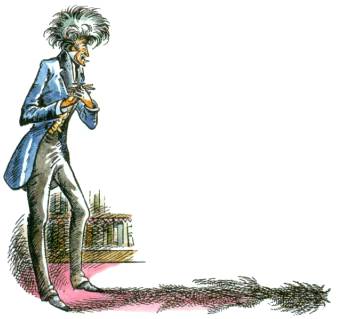
This passage is a reminder that many of us live our lives by attributing wonderful-but-impossible events to the imagination, to our "nerves getting out of order." It's difficult to believe that things really might be as magical as they sometimes seem, so we reduce our experiences to by giving them a mundane explanation: "Life isn't really all that great, it's just chemicals in our brains making us feel that way," or "That's not true, they're just deluding themselves."
Being very logical and evidence-based is a good thing to know how to do, but when we control every aspect of our lives with rigorous rational materialism, we run the risk of eliminating the possibility of wonder. We risk living inside of rules that we invent to describe our experience of life, rather than life itself.

No comments:
Post a Comment