
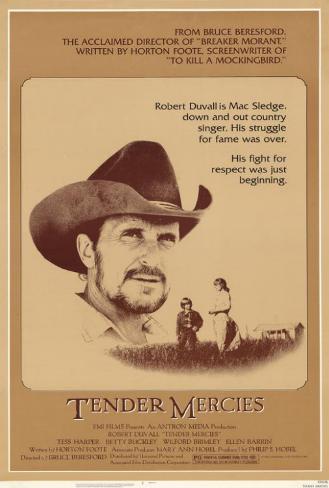
I suspect that the slow cinematography, the empty spaces (both sonic and visual), and the many long shots of the flat Texan townscapes make significant contributions to the film's pleasantly tranquillizing effect; however, the primary engine of the film is its structural efficiency. The scenes are direct and necessary, and most of them are over before they can become tedious. The beginning is saved by this to-the-point brevity: more than two months pass in 20 minutes as Mac quietly integrates himself into the lives of Rosa Lee and Sonny through a series of moments that are more reminiscent of weekend chores than drama, and yet manage to be charming and revealing. I especially like when Mac eats dinner with Rosa Lee and Sonny for the first time. After too many moments of forks scraping on bowls, the dialogue begins: "What's your name mister?" "Mac." Cut.
The quiet voyeurism of the beginning sets the tone for the rest of the narrative, although the action does pick up as we learn about the characters, but the amount of interpersonal conflict that Mac Sledge (Robert Duvall) engages in can be counted on one hand. I appreciate how Tender Mercies never resorts to flashy cinematic hooks in order to sustain interest. The film features few arguments, no violence, no sex. There's no soundtrack except for the music that the characters write and play. No montage, no mystery, and the characters aren't verbal enough to have snappy dialogue.
But the characters' laconicism gives poignant emphasis to the film's climax when Mac says, "I don't trust happiness. I never did, I never will." I believe him. However, in spite of Mac's implied mistrust of the domestic bliss that he seems to experience with Rosa Lee, he does not leave her. The closing shots of Mac and Sonny passing the football illustrates Mac's willingness to make new attachments in spite of the trauma of losing everything that was once important to him: his career, his ex-wife, his child. In a converse and neat parallel, Sonny makes his first conscious attachment by letting Mac into his life. I honor the state of mind that allows Mac—and all of us—to accept love while knowing from experience that pain is bound to follow.
Douglas Messerli writes that "in order to survive in [Rosa Lee's] world, Sledge has had to abandon the messiness of a creatively meaningful life." I disagree. By the end of the film, Mac's life is creatively meaningful—perhaps more meaningful than it had ever been when he was an actively famous country star. The successful musical figures in the film, after all, are not inspiring: Dixie is unlikeable whenever she isn't singing, her manager is wrongfully critical of Mac's song, and Sue Anne's husband is a drunk. In contrast, Mac garners genuine appreciation from his audience at a local bar, and he puts out a record that helps his struggling musician friends achieve their dreams without having to go on tour and resume that lifestyle. Mac is no longer enchanted with the glamor of the music business, and prefers to live with Rosa Lee in what Messerli calls "a grubby, unpainted shack in the middle of nowhere," a condemnation that stinks of urban bias. For Mac, the middle of nowhere is the right place to be, and what is true of one is true of many.

No comments:
Post a Comment